Bedding · Nursery guide
Choosing Crib Sheets for Comfort, Fit, and Easy Care
A crib sheet is a modest purchase with an unusually important job. It should fit the mattress snugly, feel pleasant against a baby’s skin, and survive the recurring laundry that accompanies life with a small child. The best choice is not necessarily the most elaborate one. It is the one that fits reliably, suits the room, and makes ordinary care manageable.
Published November 18, 2026
Nursery shopping encourages a certain kind of optimism. A drawer is imagined in its eventual state: folded garments, orderly cloths, perhaps a stack of fresh sheets in colors chosen to suggest calm. Then the baby arrives, and the drawer becomes less a composition than a working document. Sheets are changed at inconvenient hours. Laundry accumulates. What matters is no longer the shade of the trim but whether the clean sheet is easy to find, easy to wash, and still fits after a season of use.
That practical turn is useful when choosing crib sheets. Comfort matters, but so does construction. A sheet must match the mattress, remain secure, and be made from fabric that works for the household’s climate and laundry routine. The nursery can be beautiful; it should also be arranged around the realities of caring for an infant.
One distinction deserves emphasis from the outset: a fitted crib sheet is the only bedding that belongs on the mattress for an infant’s sleep. Safe-sleep guidance from organizations such as the American Academy of Pediatrics recommends placing babies on their backs on a firm, flat sleep surface with a fitted sheet, and keeping the sleep space free of loose blankets, pillows, stuffed toys, and other soft objects. A soft-feeling fabric is not a reason to add extra layers. For questions about a particular sleep setup, a pediatrician or other qualified health professional is the right source of advice.
Fit Comes Before Feel
A sheet that does not fit properly is not merely untidy. Excess fabric can loosen; a fitted corner that slips may leave the mattress exposed or create a pocket of material where none should be. Begin with the crib mattress, not the packaging. Check the mattress dimensions and compare them with the sheet’s stated measurements. Crib products are commonly sold in standard sizes, but “standard” is not a substitute for measuring—especially if the mattress is unusual, older, or supplied with a specialty crib.
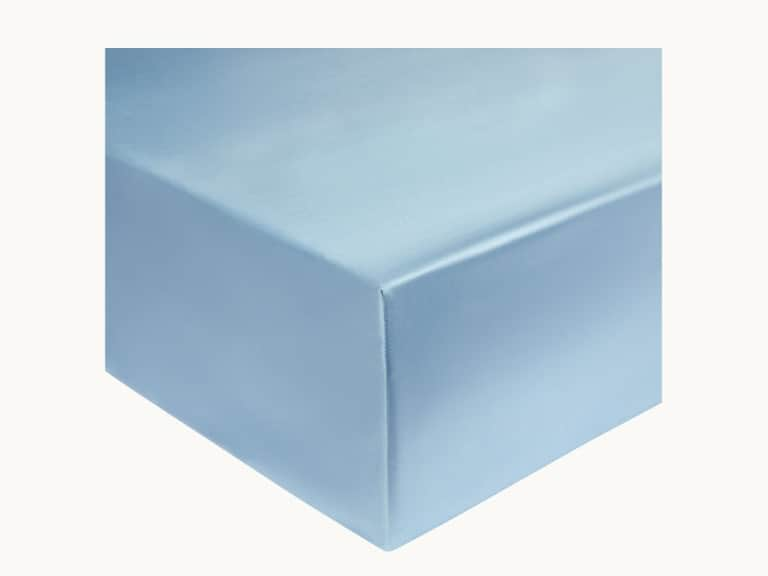
Measure the mattress length and width, and note its depth. A fitted sheet must accommodate the mattress thickness without straining at the corners. If the product information gives a pocket depth or a range of compatible mattress heights, compare that detail with the mattress itself. A sheet that is too shallow may pull away; one that is too large can leave slack. Neither should be solved by tucking or improvising. The intended fit is close and even, with elastic designed to hold the sheet around the mattress.
Once the sheet is on, run a hand around the perimeter. The fabric should lie flat, with the corners securely under the mattress and no loose folds across the sleep surface. Check again after washing, because cotton can shrink depending on its weave, finishing, and care. A label that says a sheet is pre-shrunk does not remove the value of measuring or inspecting the fit; it simply gives useful information about how the fabric has been prepared.
Buy sheets for the exact sleep surface in use. A mattress protector, if used, can add a little thickness, so the final fit should be checked with the complete setup as it will be used. Avoid stacking extra pads or layers in an attempt to alter firmness or compensate for a sheet that does not fit. The mattress and any accessories should be used according to their instructions and current safe-sleep recommendations.
Choosing Fabric for the Room and the Routine
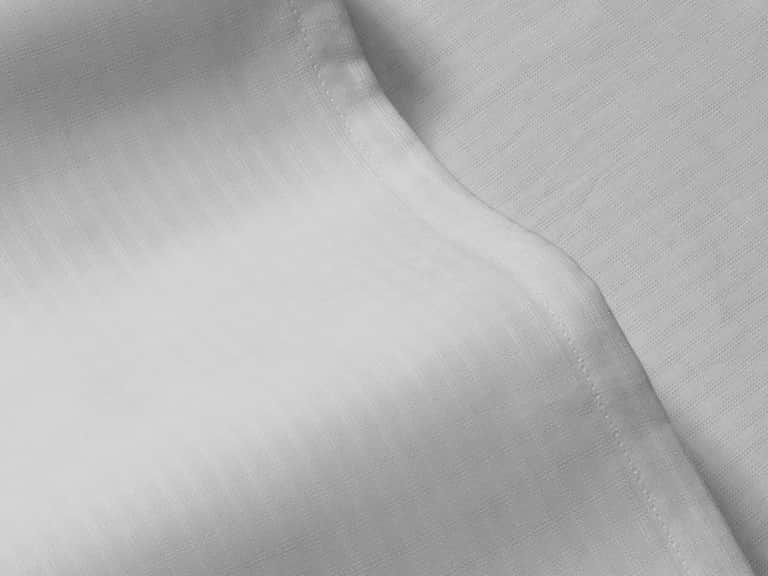
Fabric determines much of a sheet’s first impression: crisp or soft, airy or warm, smooth or brushed. It also shapes how the sheet behaves through repeated washing. Cotton remains a common choice because it is widely available, familiar to care for, and offered in different weights and finishes. But “cotton” alone does not tell the whole story. The weave, finishing, and weight influence the hand of the fabric and how it feels against the skin.
Brushed cotton flannel has a soft, slightly raised surface that can feel warm and comforting in a cool room or during colder months. Brushing lifts fine fibers on the fabric’s surface, creating its characteristic fuzzy feel. That same structure may make flannel less appealing in a warm nursery or for a household that prefers a lighter sheet. Flannel is a fabric choice, not a substitute for regulating room temperature or following safe-sleep guidance. A baby should be dressed appropriately for the environment, and caregivers should consult trusted pediatric guidance if they are unsure about overheating or clothing layers.
For warmer conditions, a lighter cotton weave may feel more breathable and less insulating. Percale, for example, generally has a crisp, matte character, while sateen tends to feel smoother and more draped. Neither name guarantees a particular degree of comfort; fiber quality, construction, and personal preference all contribute. For a crib sheet, the most luxurious-feeling finish is not automatically the most suitable. Consider how the room tends to feel overnight, how often the laundry is done, and whether the fabric remains comfortable after many cycles.
Other fibers and blends may appear in nursery bedding, but their labels should be read carefully. Look for a clear fiber-content statement rather than relying on vague terms such as “natural,” “cooling,” or “gentle.” Claims about hypoallergenic properties or health benefits can be broad, and no fabric can promise that every baby will tolerate it. If a child has a diagnosed sensitivity or skin condition, ask a clinician for individualized advice rather than treating a marketing description as medical guidance.
Organic Cotton and Certification Labels
Organic cotton attracts families who want to know more about how fiber was grown and processed. It can be a meaningful consideration, but the word “organic” on its own does not describe every stage of a textile’s life. Check what the claim applies to and whether it is supported by a certification that covers the product or relevant parts of its supply chain.
GOTS—short for the Global Organic Textile Standard—is one certification shoppers may encounter on textile products. Its scope includes criteria for organic fibers and processing, as well as social and environmental considerations along the certified supply chain. The precise claim matters: a label may refer to a certified product, a component, or a facility. Read the wording and, where available, verify the certification rather than assuming that any reference to organic cotton means the entire item is certified.
Certification can help make a complicated supply chain more legible, but it does not tell you whether the sheet fits your mattress, feels right in your nursery, or suits your washing machine. Those are separate questions. A well-chosen sheet can be organic or conventional; what matters is that material claims are clear and that the product meets the practical and safety needs of the sleep space.
Thread Count Is Only One Clue
Thread count—the number of threads in a square inch of fabric—is frequently presented as a simple measure of quality. It is not. The number can offer context, but it does not describe fiber quality, weave, finishing, durability, or the way a sheet feels. An unusually high figure is not a guarantee of softness or longevity, and comparisons across different kinds of fabric can be misleading.
When assessing a crib sheet, give more attention to construction, fit, care directions, and the clarity of the product description. Does the maker state the fiber content? Are the mattress dimensions and compatible depth clear? Is the sheet machine washable? Is there guidance about drying and shrinkage? These details are not as glamorous as a large number on a product tag, but they are more likely to affect life in the nursery.
Laundry Is Part of the Purchase
Frequent laundering is ordinary nursery care, not an exceptional test of a sheet. Before buying, check whether the care instructions suit the machines and detergents you already use. A sheet that requires a delicate cycle, careful temperature control, or line drying may be entirely reasonable—but only if that routine is realistic for your household. At two in the morning, convenience is its own form of quality.
Follow the product’s label for water temperature, detergent, bleaching, and drying. Washing before first use may be recommended by the manufacturer; if so, do it before placing the sheet on the mattress. Avoid fabric softener or bleach unless the care directions permit them. Such products can affect fibers or finishes, and more products do not necessarily mean cleaner fabric. A fragrance-free detergent may be preferable for families who wish to limit added scents, though individual sensitivities vary.
Dry the sheet according to its care label and avoid excessive heat if the manufacturer warns that it may cause shrinkage. Remove it promptly if that helps prevent deep creases, then inspect the corners and seams from time to time. Discard or retire a sheet if the elastic has failed, the fabric is torn, or it no longer stays securely in place. Keeping several correctly fitted sheets can make changes less stressful, but every sheet in rotation should be checked in the same way.
It is tempting to treat laundering as a matter of rescuing a favorite sheet. In practice, a simple rotation is often more useful: a clean sheet on the mattress, one in the wash, and another ready if needed. The exact number depends on how often laundry can be done and what makes sense for the household. There is no need to build a large collection before you know which fabric and fit work best.
A Simple Way to Compare Options
Product descriptions can feel like a parade of adjectives. A short checklist helps separate useful information from atmosphere. When comparing crib sheets, consider the following:
- Dimensions: Do the stated sheet measurements correspond to the crib mattress?
- Depth and elastic: Is the sheet designed for the mattress thickness, and does it have a secure fitted construction?
- Fiber and weave: Is the material identified clearly, and does its texture suit the room and your preference?
- Certifications: Are organic or processing claims specific and verifiable?
- Care: Can you follow the washing and drying instructions repeatedly?
- Condition over time: Does the sheet retain its fit and integrity after laundering?
Price is part of the comparison, but it is best considered alongside durability and care. A more expensive fabric may have a finish or certification that matters to you; a less expensive one may be easier to replace and entirely adequate. What matters is not the prestige of the label but whether the sheet performs its simple task consistently.
Keep the Sleep Space Spare
Nursery design often invites layering: a quilt folded at the foot of the crib, a decorative pillow, a soft toy arranged with apparent casualness. Those details may belong in a room’s visual language, but they should not be mistaken for items to leave in an infant’s sleep space. For sleep, the fitted sheet should be snug and the crib should remain free of loose bedding and soft objects, in line with current safe-sleep recommendations.
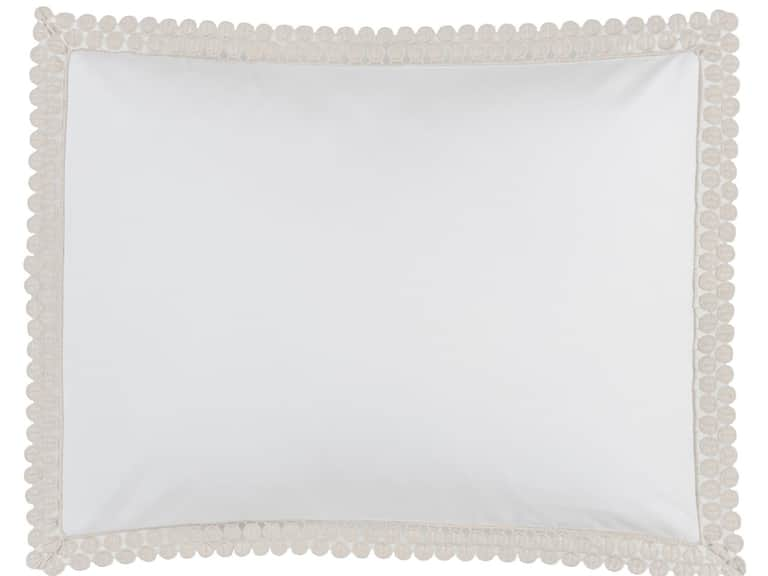
This is one place where restraint is not a style preference but a practical principle. A sheet does not need an elaborate finish, an ornamental skirt, or a coordinated collection to be useful. Its most important qualities are nearly invisible: the corners stay put, the surface is smooth, the fabric can be washed, and the mattress remains uncovered except for the fitted sheet and any product permitted by applicable safety guidance.
The Quiet Standard
Choosing crib sheets is a small exercise in deciding what deserves attention. Fabric has a feel and a mood; color can give a nursery its particular calm. But fit is the first test, and easy care is not an afterthought. A sheet that is correctly sized, suited to the room, clearly labeled, and manageable to launder will do more for daily life than a complicated promise of perfection.
Start with the mattress dimensions. Choose a fabric that makes sense for the nursery’s temperature and your preferences. Read the care label before buying, and treat certifications as useful information rather than a substitute for checking the details. Then inspect the sheet each time it is fitted: flat, secure, and free of loose folds. The result may not announce itself. That is part of its virtue. In a nursery, the most successful objects often disappear into the routine, doing their work without asking for attention.